GIFBreeder

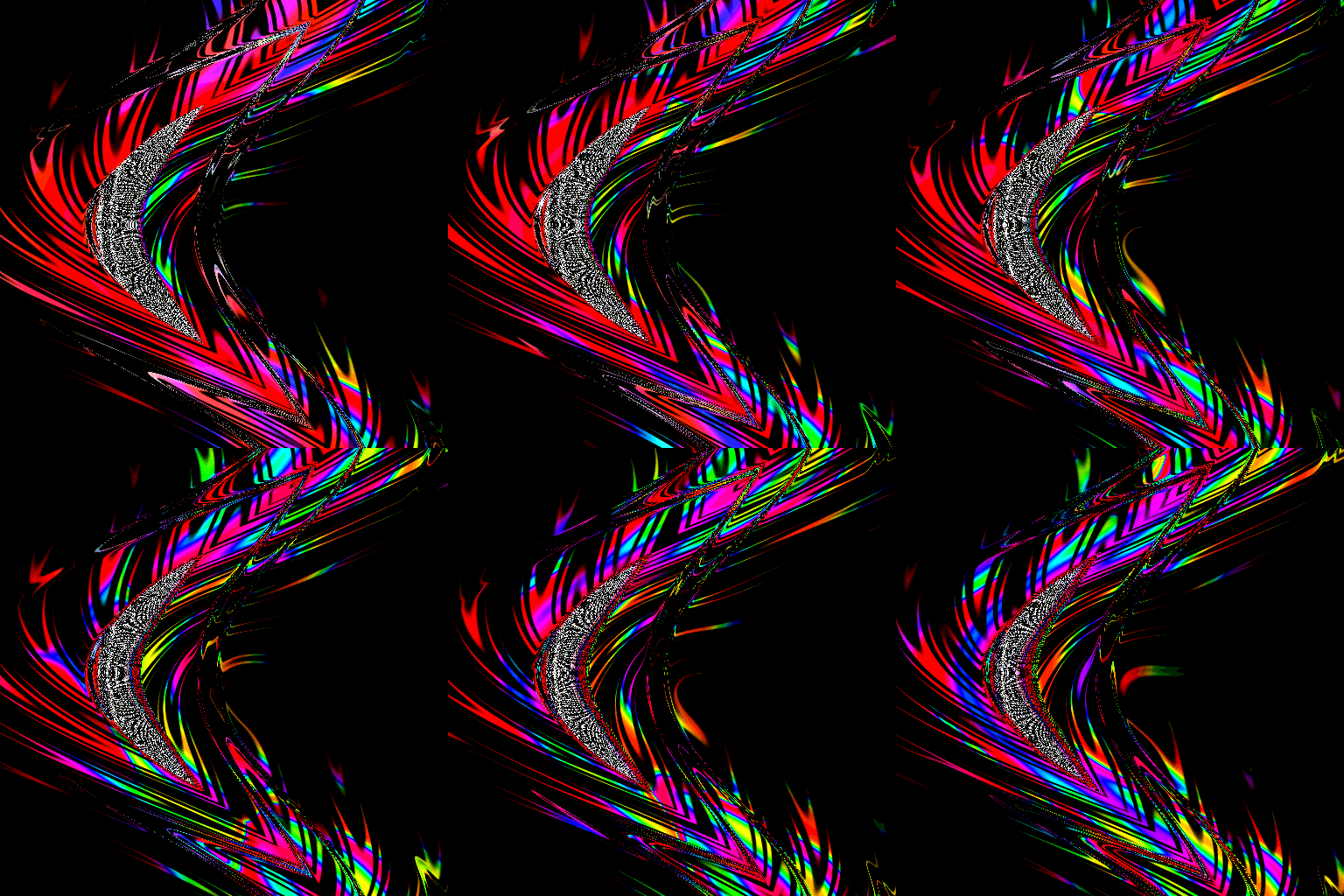


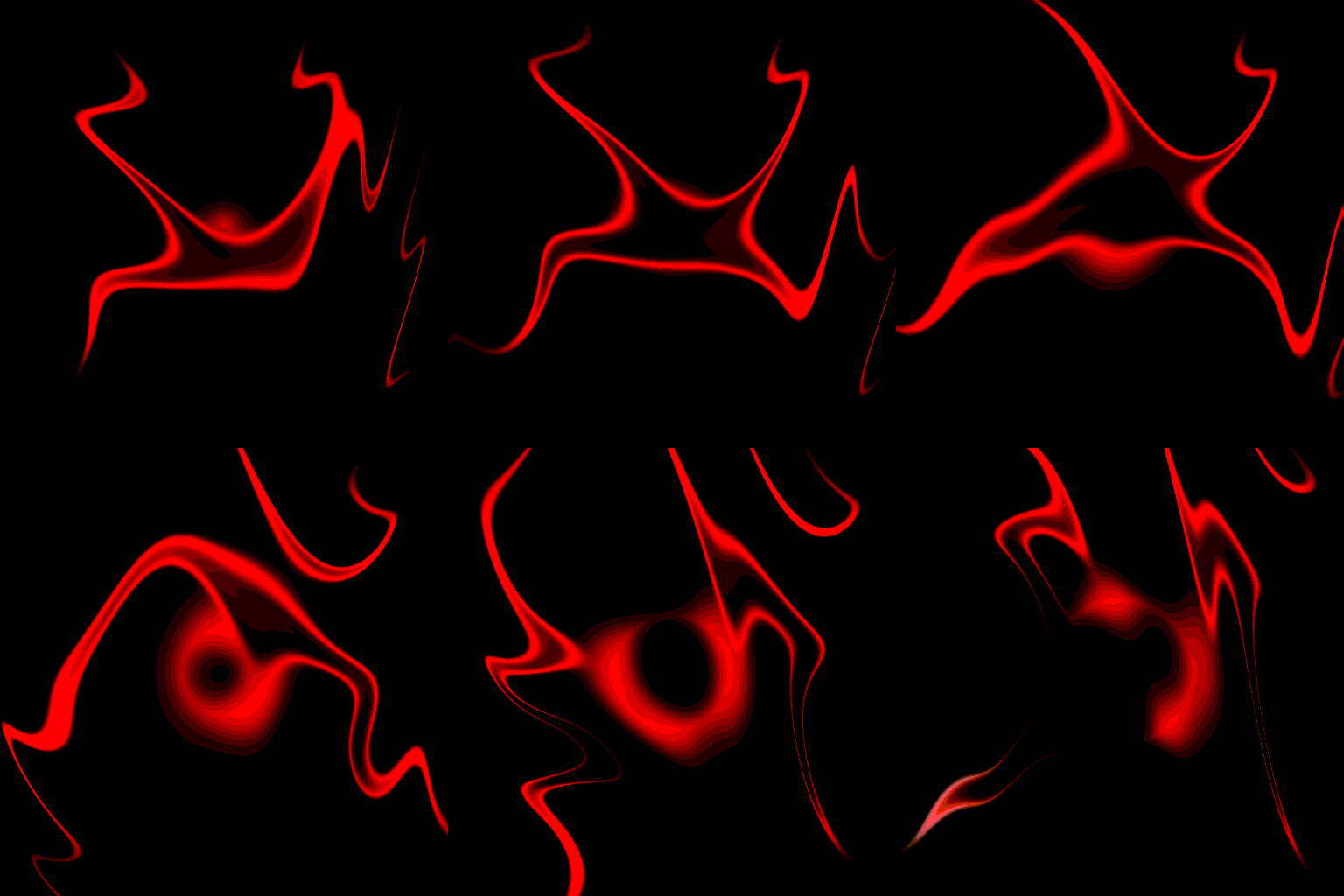

A six-output panel for the eventual paper hero or results section.
1. Motivation
GIFBreeder asks what changes when the object of interactive evolution is no longer a static image but a small temporal world. Adding time gives users a new axis of surprise: motion, rhythm, phase, flicker, and transformation.
2. System
The current app lives at openendedness/gifbreeder and already has archived genomes, export tooling, and a visual interface for breeding animated outputs.
3. Representation
A concise representation section will make this page useful as a web paper rather than only as a project note: readers should be able to understand what gets inherited, what gets perturbed, and why the resulting search space remains expressive.
4. Results and Observations
Possible framing: users do not simply pick prettier GIFs; they steer a latent dynamical system by repeatedly noticing partial structure and preserving it long enough for new structure to attach.
5. Discussion
References
Secretan, J., Beato, N., D'Ambrosio, D. B., Rodriguez, A., Campbell, A., & Stanley, K. O. (2011). Picbreeder: A case study in collaborative evolutionary exploration of design space. Evolutionary Computation, 19(3), 373-403.
Stanley, K. O. (2007). Compositional pattern producing networks: A novel abstraction of development. Genetic Programming and Evolvable Machines, 8, 131-162.